The Faculty of Social Sciences of the University of Macau hosted the 2026 Summer Research Camp for Mainland Undergraduate and Graduate Students from July 26 to 31, 2026. Cheung Kong School of Journalism and Communication selected six students to participate in this research activity.
The summer camp was structured around four major modules: professional courses, interdisciplinary seminars, academic exchange salons, and historical and cultural visits. It aimed to build an academic interaction platform for students from both sides, helping participants broaden their international perspectives, enhance cross-cultural communication skills, and stimulate their academic research potential.
The one-week program was intensive and fulfilling. Students experienced the unique interdisciplinary atmosphere of the University of Macau in immersive classrooms, appreciated the cultural fusion of Chinese and Western influences in Macau through city walks, and expanded their thinking while identifying areas for improvement through exchanges and interactions with peers from various regions. They successfully completed all research tasks and received their certificates of completion. Selected reflections from participating students are now compiled and published to share the insights and takeaways from this research experience..
1、Summary and reflections by Wang Yun, a sophomore majoring in International Journalism and Communication
When I first arrived at UM, Professor Hu Weixing, the Dean of the Faculty, gave a detailed introduction at the opening ceremony to the disciplinary characteristics and research directions of the Faculty’s various programmes, and encouraged us to engage in deep exchanges with professors from different fields. Those words helped me let go of my initial reserve and filled me with anticipation for the days of learning ahead.
The academic activities of the camp were very well arranged, including lectures and workshops in communication, economics, psychology, Macau studies, and other fields, which gave me a firsthand sense of the Faculty of Social Sciences’ distinctive interdisciplinary atmosphere. The most memorable was the course taught by a professor from the Department of Communication, “From Friends to Confidants: How to Build and Deepen Interpersonal Relationships.” In class, the professor did not mechanically pile up theories, but turned the classroom into an interactive playground. He set up a “matchmaking corner” outside the classroom, and we simulated the matchmaking process in groups. Through role-playing and interaction with others, we personally experienced how social media platforms and face-to-face interpersonal communication can help us make friends and deepen relationships. After the game, the professor guided us back to the theories, and the originally abstract knowledge suddenly became concrete and tangible. For the first time, I realized that communication studies is not a set of lines to be memorized by rote, but a vivid lens for understanding how people interact with information and with society.
In extracurricular activities, we visited historical sites such as the Ruins of St. Paul’s, A-Ma Temple, and the former Iec Long Firecracker Factory. Standing on the steps of the Ruins of St. Paul’s and looking at this architectural relic blending Chinese and Western elements, the sentence the professor had said in class—that “Macao has endowed UM with a unique cultural character”—became concrete and vivid. The city itself is a weighty book, and every relic tells a story of different civilizations meeting, colliding, and blending.
Six days is not a long time, yet it left a deep imprint on my heart. In discussions with classmates from different universities, I discovered many blind spots in my own knowledge structure and gained new perspectives through the clash of ideas. At the closing ceremony, the moment I received my certificate, I knew that this was not merely the end of an experience but a new beginning. This summer camp strengthened my determination to continue my studies in the social sciences, and made me understand even more clearly that good research requires both a solid theoretical foundation and going into real social settings to observe and feel. In the future, I hope to carry the curiosity and sense of inquiry I brought back from Macao and go further on the academic path.
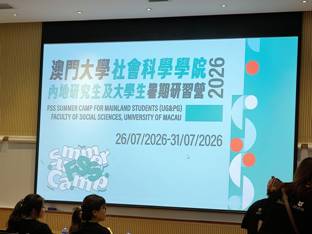
Opening ceremony of the study camp
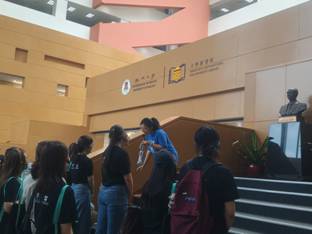
Visit the UM Library
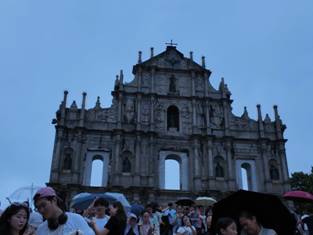
Visit the Ruins of the Jeronimos Monastery Memorial Archway
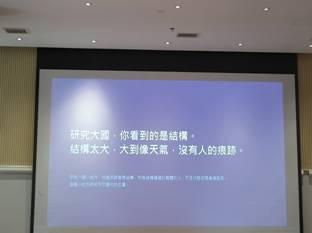
Research courses at the University of Macau
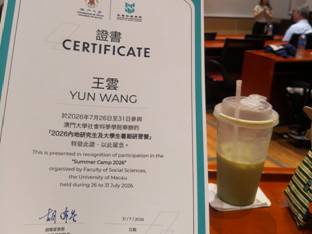
Certificate of Completion
2、Summary and reflections by Lin Wanying, a junior majoring in Advertising
In July 2026, I participated in the University of Macau's Summer Camp for Mainland Chinese graduate and undergraduate students. This program combined classroom instruction, campus visits, and urban fieldwork, allowing me to personally experience the University of Macau's international education model and gain a deeper understanding of Macau's disciplinary strengths and urban characteristics within the context of the Guangdong–Hong Kong–Macao Greater Bay Area—effectively broadening my academic horizons.
During the camp, I stayed on campus and immersed myself in the learning environment typical of international universities. By visiting the University History Museum, the library, and the Department of Communication's broadcasting studio, I gained a genuine appreciation for the University of Macau's inclusive academic culture and its comprehensive teaching facilities. The university also arranged a visit to the Historic Centre of Macau, enabling me to experience firsthand Macau's unique urban culture—blending Chinese and Western influences—and its strategic position as a core hub within the Greater Bay Area.
The research camp offered a variety of social science courses, including Communication Studies, Sociology, Psychology, Public Administration, and Economics. The Communication Studies course, which used case studies and interactive games to explain interpersonal communication theories, aligned closely with my academic interests in advertising; other courses were grounded in the realities of Macau's local context and the development of the Greater Bay Area, fully demonstrating the unique value of interdisciplinary social science research. Additionally, a lecture series on further education provided detailed insights into the University of Macau's graduate programs, serving as an important reference for my future academic pursuits.
This study trip was immensely rewarding. The interdisciplinary curriculum helped break through the cognitive limitations stemming from my single-disciplinary background and revealed the broad range of applications for communication studies in fields such as public communication and urban cultural tourism promotion. Through interactions with students from various regions, I also became more clearly aware of my own areas for improvement.
This study tour has not only broadened my horizons but also helped me clarify my future direction. Moving forward, I will continue to strengthen my academic foundation, enhance my research capabilities and English proficiency, and strive to become a versatile professional with an international perspective.
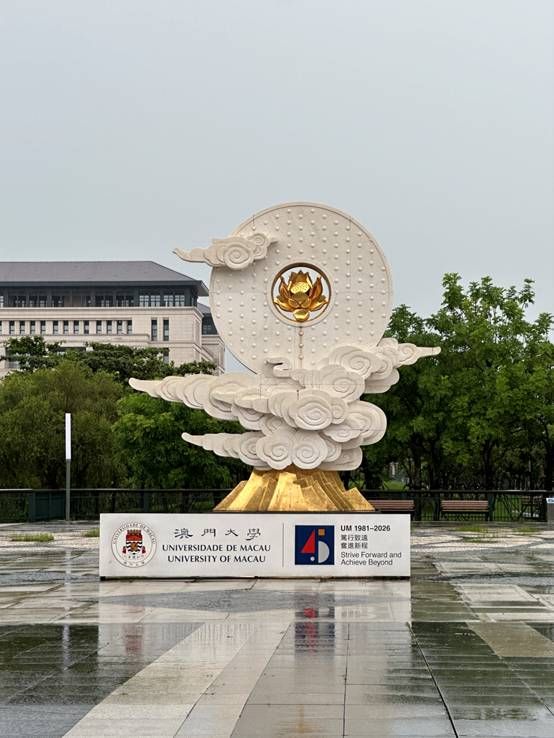
Campus tour of the University of Macau
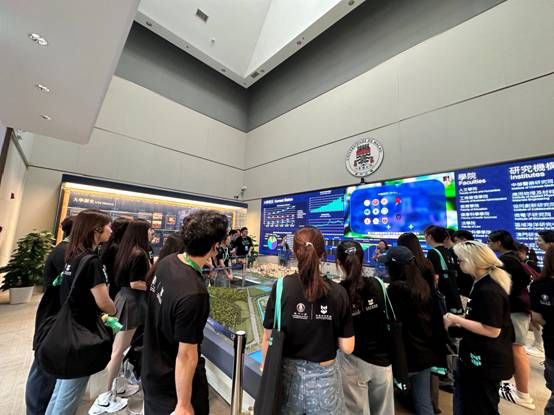
Campus tour of the University of Macau
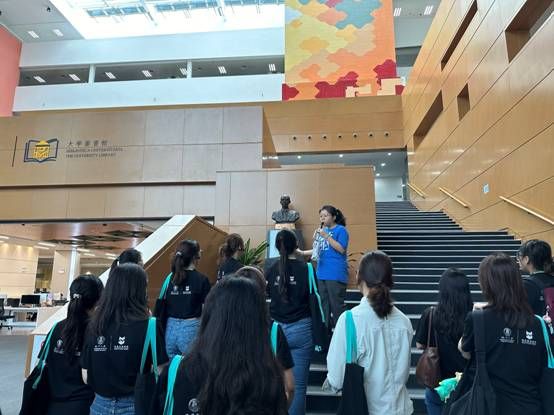
Visit to the University of Macau Library
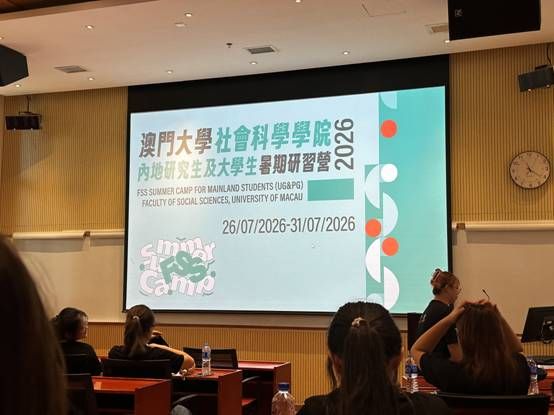
University of Macau courses
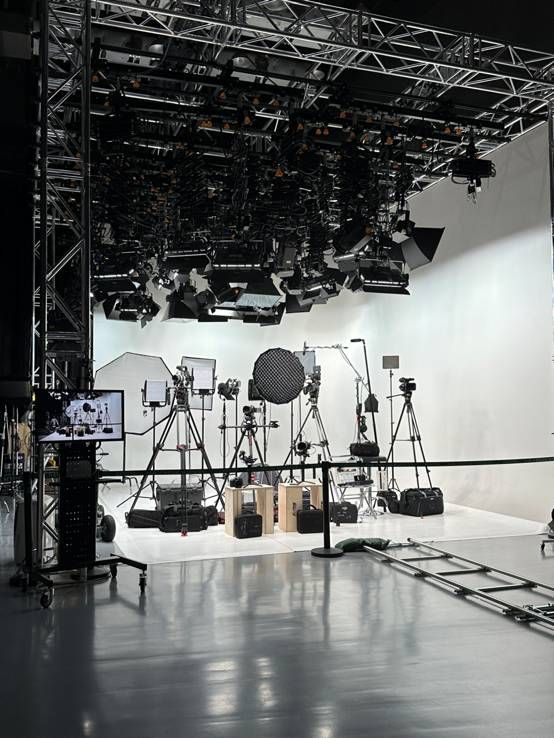
Campus tour of the University of Macau
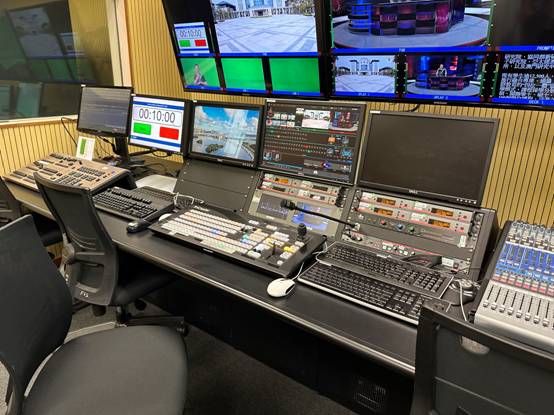
Campus tour of the University of Macau
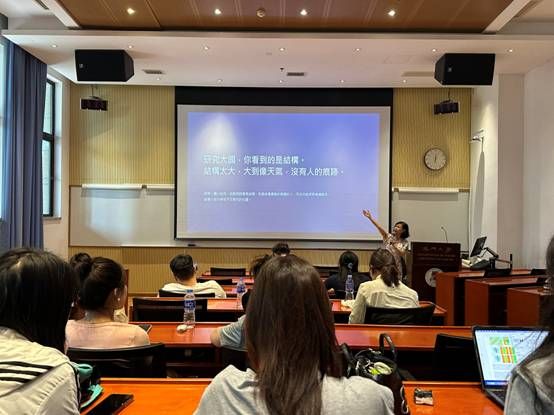
University of Macau courses

