
教授、博士生导师
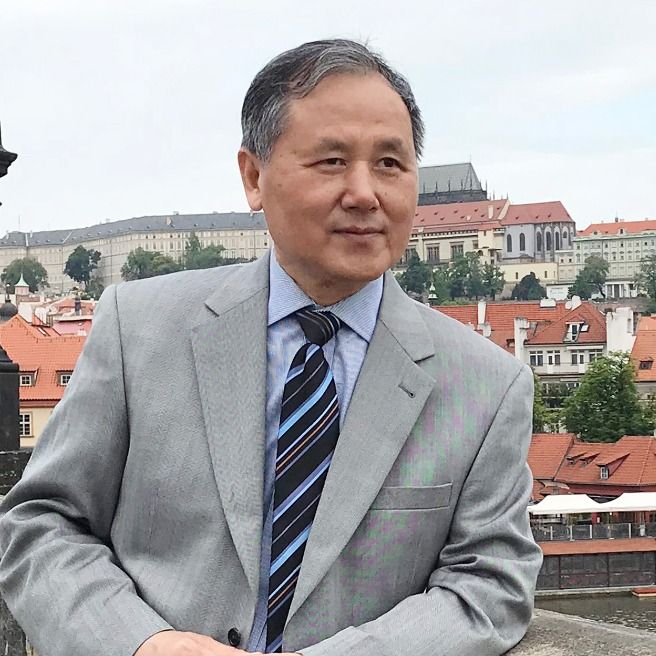
李喜根1980年毕业于复旦大学新闻系,1981年起在国内从事新闻工作,曾任职上海电视台、新民晚报和科技日报。1989年毕业于中国社会科学院研究生院新闻系。1999年从美国密西根州立大学获得传播学博士学位。曾在美国路易斯安那州立大学、阿肯色州立大学、南伊利诺大学任教。2008年至香港城市大学媒体与传播系任教,曾任香港城市大学媒体与传播系主任、教授。2019年任上海大学新闻传播学院特聘教授,2020年兼任北京外国语大学国际新闻与传播学院冠名讲席教授。2025年12月任汕头大学长江新闻与传播学院教授。
从1994年起开始研究网络报纸等新媒体,研究领域包括媒体信息传播及其社会影响、媒体使用与社会互动、国际传播与媒体效果。截至2026年3月,在国际学术期刊发表英文论文47篇,包括国际主流新闻与传播学学刊《传播学学刊》(Journal of Communication)、《新闻与大众传播季刊》(Journalism and Mass Communication Quarterly)、《广播与电子媒体学刊》(Journal of Broadcasting and Electronic Media )、《计算机传导传播学刊》(Journal of Computer-Mediated Communication) 、《新媒体与社会》(New Media and Society) 、《社交媒体与社会》(Social Media + Society)以及《传播学年刊》(Communication Yearbook) 等;出版英文学术专著两本、学术书籍章节16篇,在国际学术会议 (ICA, AEJMC, NCA) 发表英文论文76篇;在中国社会科学引文索引CSSCI来源期刊发表论文数篇。
自1999年起从事传播学理论和传播学定量研究方法教学,指导博士、硕士研究生开展独立研究;培养出一批在新闻传播学领域有所建树的青年学者和从业者。研究项目曾获得香港研究资助局优配研究基金立项,主持完成一项国家社科基金重点项目,指导学术团队开展新闻传播领域重要课题的研究工作,并指导青年教师、研究生在 SSCI 期刊发表高水平英文论文;2022年、2024年分别荣获两项新闻传播国际学术机构颁发的最佳论文奖。
主要研究成果
中文期刊论文
1. 李喜根,国际传播效果评估的理论前提与实践框架,《对外传播》,2025年第8期,4-7页
2. 李喜根,构建更有效力的国际传播体系:全域视角与理论导引,《对外传播》,2025年第2期,8-11页
3. 李喜根,全球舆论新生态下的精准传播:理论视角与实践路径,《对外传播》,2024年第8期,4-7页。《新华文摘》2024年21期全文转载,148-150页
4. 李喜根,国际传播效能提升路径——基于传播学理论和研究的探讨,《对外传播》,2023年第7期,53-56页。《新华文摘》2023年21期全文转载,152-154页
5. 李喜根、张一木、于晓萌,国际冲突中的舆论较量:理论、路径、策略,《对外传播》,2022年第5期,64-67页
6. 李喜根、张霁雯、张静,探索数字新闻理论发展与创新路径,《全球传媒学刊》,2021年第5期, 56-79页
7. 李喜根,网络时代媒体影响力:媒体效果研究视角,《全球传媒学刊》,2020年第4期,146-162页
8. 李喜根,以社会科学方法研究国际传播效果,《对外传播》,2017年第1期,44-47页
9. 李喜根,新闻与传播学理论以及新闻与传播学科学研究,《新闻与传播研究》,2009年第1期,19-24页
10. 李喜根,“美国式的研究”才是高质量研究?《国际新闻界》,2006年7月号, 45-49页
英文期刊论文
1. Wang, Y., Li, X. & Fu, M. (2025). The Effect of Perceived Privacy Risk-Benefit Ratio on Intention to Discontinue Generative AI Use: Mediating Roles of Psychological Reactance and Information Avoidance, International Journal of Human–Computer Interaction, https://doi.org/10.1080/10447318.2025.2578716. (SSCI journal)
2. Tu, C., Li, X., Liu, X., Li, Q. & Zhong, L. (2025). Involvement type matters: Examining policy-related news exposure and opinion expression on social media, International Journal of Public Opinion Research, 37(2). https://doi.org/10.1093/ijpor/edaf014. (SSCI journal)
3. Liu, X. & Li, X. (2023). Diversified Exposure Mitigates Biased Perceptions: Involvement, Media Exposure, and Hostile Media Perceptions toward Coverage of U.S.-China Trade Disputes, International Communication Gazette, 87(2), 168-188. https://doi.org/10.1177/17480485231216581. (SSCI journal)
4. Dai, Y. & Li, X. (2023). Opinion Extremity Predicted by Media Exposure, Information Processing Mode, and Issue Sophistication Regarding U.S.-China Trade Dispute, International Journal of Communication, 17, 7224–7245. https://ijoc.org/index.php/ijoc/article/view/21294. (SSCI journal)
5. Su, L. & Li, X. (2020). Perceived Agenda-Setting Effects in International Context: Media’s Impacts on Americans’ Perception toward China, International Communication Gazette, 83(7), 708-729. https://doi.org/10.1177/1748048520984029. (SSCI journal)
6. Li, X., Liang, Z. & Wu, X. (2020). Source Interests, News Frames, and Risk Delineation¾A Content Analysis of U.S. Newspapers’ Coverage of Genetically Modified Food (1994–2015), International Journal of Communication, 14, 3633–3654.https://ijoc.org/index.php/ijoc/article/view/12303.(SSCI journal)
7. Li, X. (2018). Media exposure, perceived efficacy and protective behaviors during a public health emergency, International Journal of Communication, 12, 2641–2660. https://ijoc.org/index.php/ijoc/article/view/8118. (SSCI journal)
8. Li, X. (2014). Perceived channel efficiency and motivation and orientation of information seeking as predictors of media dependency. Telematics & Informatics, 31(4), 628-639. https://doi.org/10.1016/j.tele.2013.11.009. (SSCI journal)
9. Li, X. (2013). Innovativeness, personal initiative, news affinity and news utility as predictors of the use of mobile phones as news devices. Chinese Journal of Communication, 6(3), 350-373. https://doi.org/10.1080/17544750.2013.789429. (SSCI journal)
10. Li, X., & Liu, X. (2012). Selective exposure, extended exposure and side-tracked exposure: A model of media exposure on the Internet and the consequential effects. Annals of the International Communication Association, 37(1), 323-347. https://doi.org/10.1080/23808985.2013.11679154. (SCOPUS journal)
11. Li, X. (2011). Factors influencing the willingness to contribute information to online communities. New Media & Society, 13(2), 279-296. https://doi.org/10.1177/1461444810372164. (SSCI journal)
12. Li, X., & Nergadze, N. (2009). Deterrence effect of four legal and extralegal factors on online copyright infringement. Journal of Computer-Mediated Communication, 14(2), 307-327. https://doi.org/ 10.1111/j.1083-6101.2009.01442.x. (SSCI journal)
13. Li, X. (2008). Third-person effect, optimistic bias, and sufficiency resource in Internet use. Journal of Communication, 58(3), 568-587. https://doi.org/10.1111/j.1460-2466.2008.00400.x. (SSCI journal)
14. Li, X. (2007). Stages of a crisis and media frames and functions: U.S. Television coverage of the 9/11 incident during the first 24 hours. Journal of Broadcasting & Electronic Media, 51(4), 670-687. https://doi.org/10.1080/08838150701626578. (SSCI journal)
1. Li, X. (2016). Emerging media: Uses and dynamics. New York: Routledge. 330 pages. https://doi.org/10.4324/9781315674155
2. Li, X. (Ed.). (2006). Internet newspapers: The making of a mainstream medium. Mahwah, N.J.: Lawrence Erlbaum Associates. 320 pages. https://doi.org/10.4324/9780203810705


长江新闻与传播学院
行川书院
数字人文与智能传播研究中心
版权所有© 汕头大学长江新闻与传播学院 技术支持:商策科技